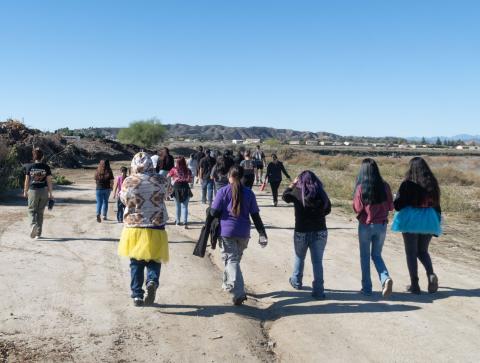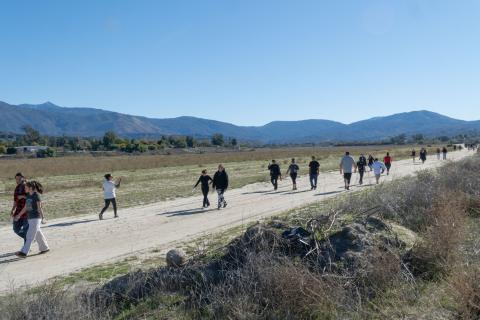

The 3rd annual Walk Against Diabetes took place at Noli Indian School on the Soboba Band of Luiseño Indians Reservation, Nov. 26. The purpose was to walk for health, awareness, and support in the fight against the disease that disproportionately affects Native Americans. In 2024, American Indian/Alaska Native adults were diagnosed with diabetes 36% more often than the total population.
Noli School Nurse Camille Diaz organized the first walk and has overseen the event each year. Having been diagnosed with Type 2 diabetes in 2009, it is important to her to see the students stay healthy, so they don’t end up on medication for the rest of their lives.
“I feel it is important for our students to learn about diabetes because of the fact that Native Americans have a higher risk of developing high blood sugar, but mostly I want our children to know about prevention and what they can do to prevent becoming a diabetic,” Diaz said. “Exercise, eating healthy, and making good choices are all great ways to a nondiabetic life.”
In the days leading up to the walk Jacquelin Phillips asked fellow teachers to have students make posters about the disease which were hung on classroom windows.
“This helped front load information, which was discussed during the circle (prior to the walk),” she said. “I passed out a few tutu skirts, arm sweatbands, diabetes pins, and bubble wands—making the walk a little more fun. This was a new trail for many, which was nice to change from last year’s walk.”
Phillips also rewarded four raffle ticket winners with gift baskets filled with wellness components to help students care for themselves.
The morning began with a short question and answer session as all the students gathered in a circle in the school’s quad area. Diaz posed questions to them and then fleshed out their answers. “Diabetes is a disease where our body cannot regulate our sugar intake so sometimes you need to be put on medication in order to control that,” she explained.
Most students know there are two types of diabetes. Type 1 affects children because their pancreas is not working correctly and they need to take insulin shots throughout their lifetime. Type 2 is a common condition where the body doesn’t use insulin well, which leads to high blood sugar (glucose) levels. It can be managed with diet, exercise, weight loss, and sometimes medication.
“This is why it is very important that we take care of our bodies, watch what we eat and rest and exercise,” Diaz told the group. “The disease has grown so much since the early 1900s; now 1 in 5 people will develop it.”
Some possible signs and symptoms include excessive thirst, urinating more and a dark discoloration on the back of the neck.
“It is really important to go to yearly checkups and have blood tests to monitor it,” she said. “It is very important to our community too because Native Americans are at a higher risk of getting diabetes.”
Many students raised their hands when asked if they had any relatives who have been diagnosed with the disease. Diaz encouraged all of them to share what they learned and help others start eating healthier and exercising.
She offered a few preventive measures such as not eating after 6 p.m. as that can raise blood sugar. She said it’s best to eat a good, healthy meal and then not snack at all before bedtime.
When asked about some foods that can help maintain a healthy blood sugar level, students offered vegetables, apples, berries, prickly pears and cactus, which are all good. Diaz said foods to avoid are candy and soda, especially dark-colored sodas. She added that fast food is too greasy and not good to consume on a regular basis.
Diaz led faculty and students through some warm-up stretches before leading them off campus for the 2.5 mile walk that took them about an hour to complete. Although some students chose to jog along the trail, most just took their time to enjoy the leisurely walk.
The students were joined by staff and teachers during the walk. “My favorite part was seeing the smile on everyone’s face and encouragement for others, even though they were exercising,” Phillips said.
After returning to campus, all walkers were treated to a delicious and healthy lunch. Tanya Briones-Rivera worked with Diaz to find something that would be healthy and refreshing. They enjoyed turkey wraps with macaroni salad and a side of fresh fruit prepared by Tribal Chef Anita Morillo.
“In Native culture, we see a lot of diabetes in our people so events like this help students learn how they can prevent it or even how to treat it,” Briones-Rivera said.
Diaz, who has been at Noli for nearly 10 years and serves as a Soboba delegate on the Riverside-San Bernardino County Indian Health Inc. Board, said, “Seeing all the students and community come together was my biggest highlight of the day.”
For more information, www.rsbcihi.org.