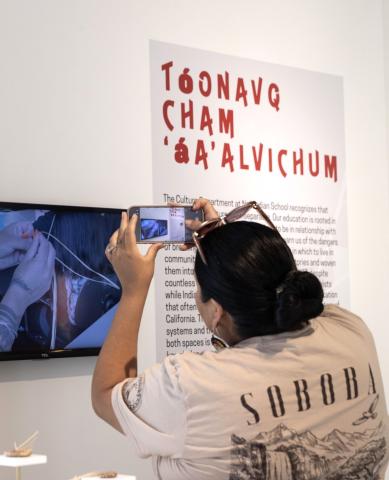
The Robert and Frances Fullerton Museum of Art (RAFFMA) at California State University, San Bernardino, in partnership with CSUSB’s Department of Tribal Relations and Noli Indian School on the Soboba Reservation, is featuring Tóonavq cham 'áa'alvichum — or “Weaving Our Stories” in Chamteela, the Luiseño language — a cultural exhibition showcasing living craft traditions created by students of the Noli Indian School through June 13.
Guided by ancestral stories of creation, ceremony, and community values, Native students at Noli navigate both Indigenous and Western educational systems. This exhibition is living proof of that journey — a space where tradition and scholarship are woven together.
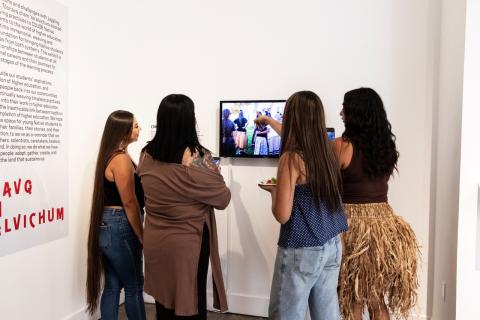
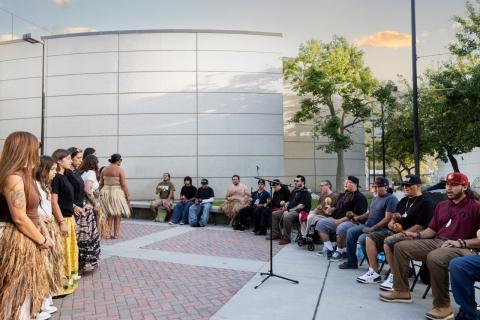
An opening reception on May 21 attracted a large group who were treated to a welcome hour followed by introductions of key contributors to the exhibit. Guests were then invited into the gallery to experience the exhibition and engage with the stories woven throughout the work.
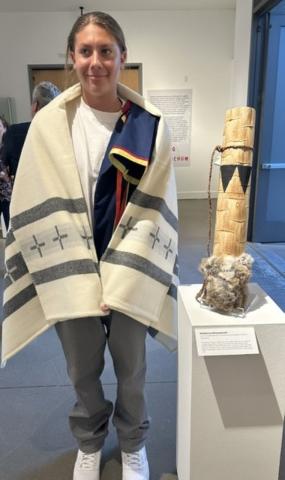
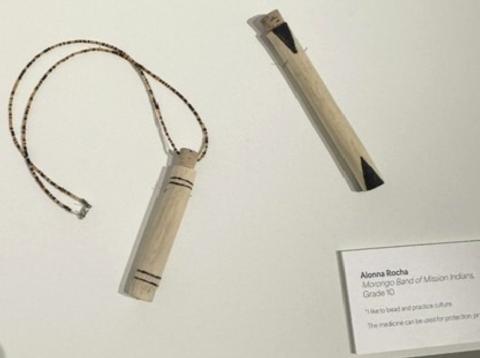
The sound of bullroarers greeted visitors as they entered the gallery. It is an ancient communication device consisting of an oblong slat of wood attached to a cord that produces a distinctive low-pitched, roaring vibration when swung rapidly in a circle. Widely used by Native American tribes, it has served for distant communication, religious ceremonies, healing rituals, and imitating the sounds of thunder or spirits. The recording was made at Noli’s annual Gathering of the People after male students had completed making their bullroarers.
Noli Cultural Teacher Tashina Ornelas said the university reached out to her with a grant collaboration project to promote traditional arts, community and higher education in the 2024-2025 school year. They wanted to collaborate with a traditional arts educator, which Ornelas has been at Noli for more than 20 years. The Culture Department at Noli Indian School understands that education and culture are inseparable.
This exhibition is the culmination of a growing relationship between CSUSB and Noli Indian School, facilitated through CSUSB’s Department of Tribal Relations. RAFFMA is honored to host a showcase that highlights the inextricable link between traditional knowledge and the success of Native students in higher education.
Native scholars are continually weaving timeless practices and teachings into their academic journeys. This exhibit serves as a powerful reminder that Native people have always been teachers, scientists, caretakers, healers, and students of the land and that this legacy continues today.
“In the first year of the program, it was mainly focused within the Culture Department, but I would also choose students who seemed eager towards both culture and higher education,” Ornelas said. “This school year we mainly focused on Art and Culture Department students. Now with three teachers within the department, it gave us access to a large majority of students with various art, writing, and cultural courses.”
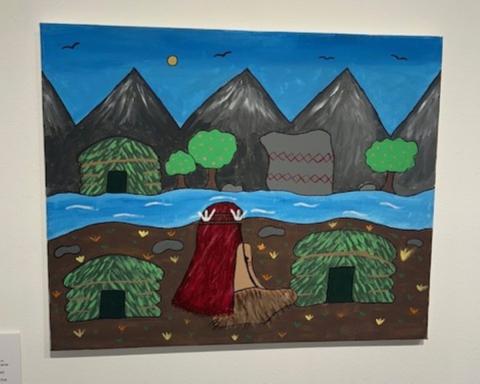
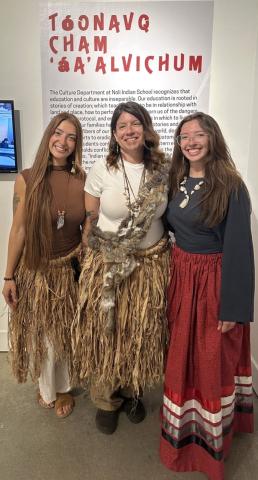
Summer Herrera teaches art and middle school culture at Noli and her sister Emma Herrera teaches English. They worked together with Ornelas to curate the exhibit. Different sections featured various topics such as clothing, materials and tools, ceremonies, and more. Summer said it started with more traditional pieces and ended with contemporary art and talking about community at Noli and beyond. She said she directed her art students to create contemporary pieces by giving them the prompt of what they would make if they were commissioned as an artist to make a traditional or contemporary art piece.
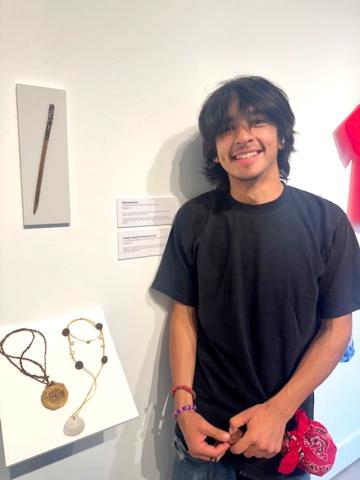
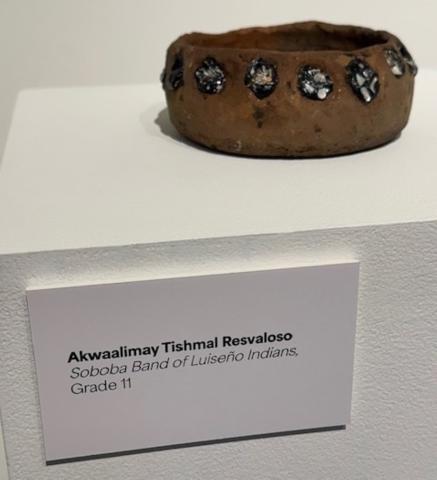
Some made sculptures and fired pottery and others made collages and paintings. Ushla Resvaloso used Pala clay as a nod to her heritage and imprinted the piece with sage flowers since Sage is the name of her cat. Michael Malone carved a hairpin that was inlaid with black tar and crushed abalone. He learned the technique of using black tar from his cousin but is a self-taught carver. Kisil Morreo is one of the students that worked on making the bullroarers.
“The reception was really beautiful,” Summer said. “We had a large turnout of students and families plus singers and dancers.”
The exhibition reflects ancestral stories of creation, ceremony and community values while highlighting the lived experiences of Native students navigating both Indigenous and Western educational systems.
Approximately 30 students either submitted their own piece or worked collaboratively on community projects/works and about half of them were able to attend the opening reception, along with seven staff members. The school is planning a field trip for some of the students who could not attend the reception.
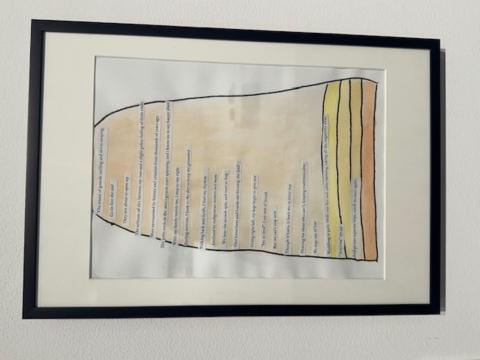
Emma Herrera said at Noli it’s important to show students the connections they can make with their culture in every subject. She prompted her English students to write a three-to-four-page argument essay about using culture in education, how the six core traditional values are used and why they are necessary, and what it takes to be successful.
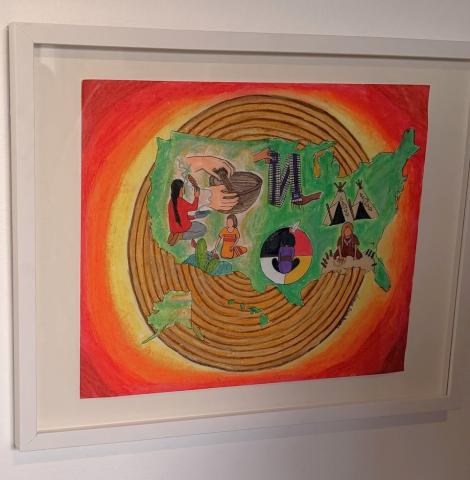
Victoria Boiso was proud to have two of her works displayed. One was a framed copy of her essay on the Six Core Traditional Values. “I also made a drawing off of that,” she said.
Emma Herrera said having the essay on display for guests to view at the beginning provided a good overview for the entire exhibit. “We want people to know that our core values are a living, breathing thing and not something in the past,” she said.
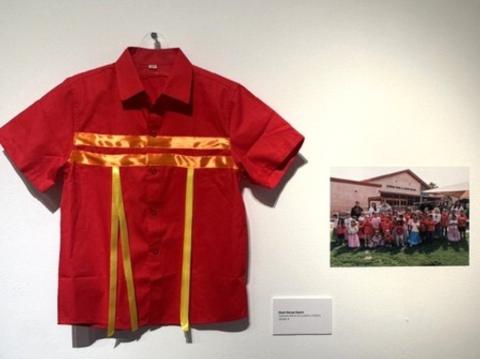
Aydreean Garcia said she was able to share her framed poem with family members that attended the reception with her. The subject was bird dancing and why it’s important. Avasily Temanxwanvish’s did an acrylic painting of her cattail dolls from her coming-of-age ceremony and was part of the group that participated in the stick game display. One of the bird skirts she made was also on view. “I really liked the flow of the exhibit,” said Avasily, who was joined by her whole family.
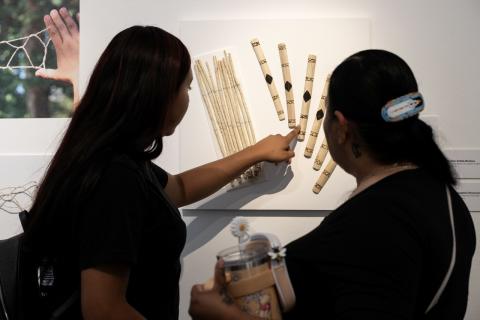
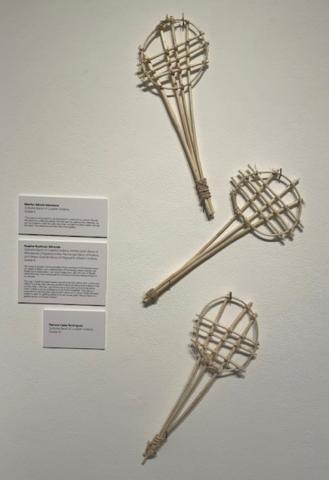
Destiny Saucedo helped with the stick game project that was done in class where students chopped the wood, measured it, burnt it and then made a design and hers was chosen for the final. She said their teacher, Emma Herrera, was very helpful with all the steps that were required.
“It was fun to see our work inside a place we could visit,” Destiny said of the reception. “This was a good experience and fun to do with my classmates.”
Nadillya Mendoza assisted with the stick game display and with the bird skirts that are made for the Soboba Tribal Preschool and kindergarten students every year. “I liked how we got to look around at everything, and my family really enjoyed it too,” the eighth grader said.
Candace Devore helped set up the stick game to make it look nice in the museum. She said she has played the game before, mostly at traditional gatherings. “I liked seeing other people’s art works at the show,” she said.
Su’kutt Morreo made a collage that featured birdsingers and included his father as well as a mountain lion which represented his clan.
“We heard very good feedback from attendees and RAFFMA museum representatives,” Ornelas said. “Everyone was very excited, impressed and honored that students shared so much of their cultural experiences with them and the public. Invited singers also shared song and dance with the community during the reception in the courtyard and this was very exciting for CSUSB and RAFFMA.”
The Robert and Frances Fullerton Museum of Art, nationally accredited by the American Alliance of Museums, maintains significant collections of ceramics and contemporary art. RAFFMA presents 10-12 temporary exhibitions annually and provides CSUSB students valuable hands-on experience that prepares them for careers in the arts. Admission is free, with a suggested donation of $3. Parking at CSUSB is $10 per vehicle. Museum Hours are Mon-Fri, 10 a.m. to 5 p.m. and the second Saturday of each month from 11 a.m. to 4 p.m.
The Tóonavq cham 'áa'alvichum exhibit will be on view through June 13. For more information, www.csusb.edu/raffma or 909-537-7689.